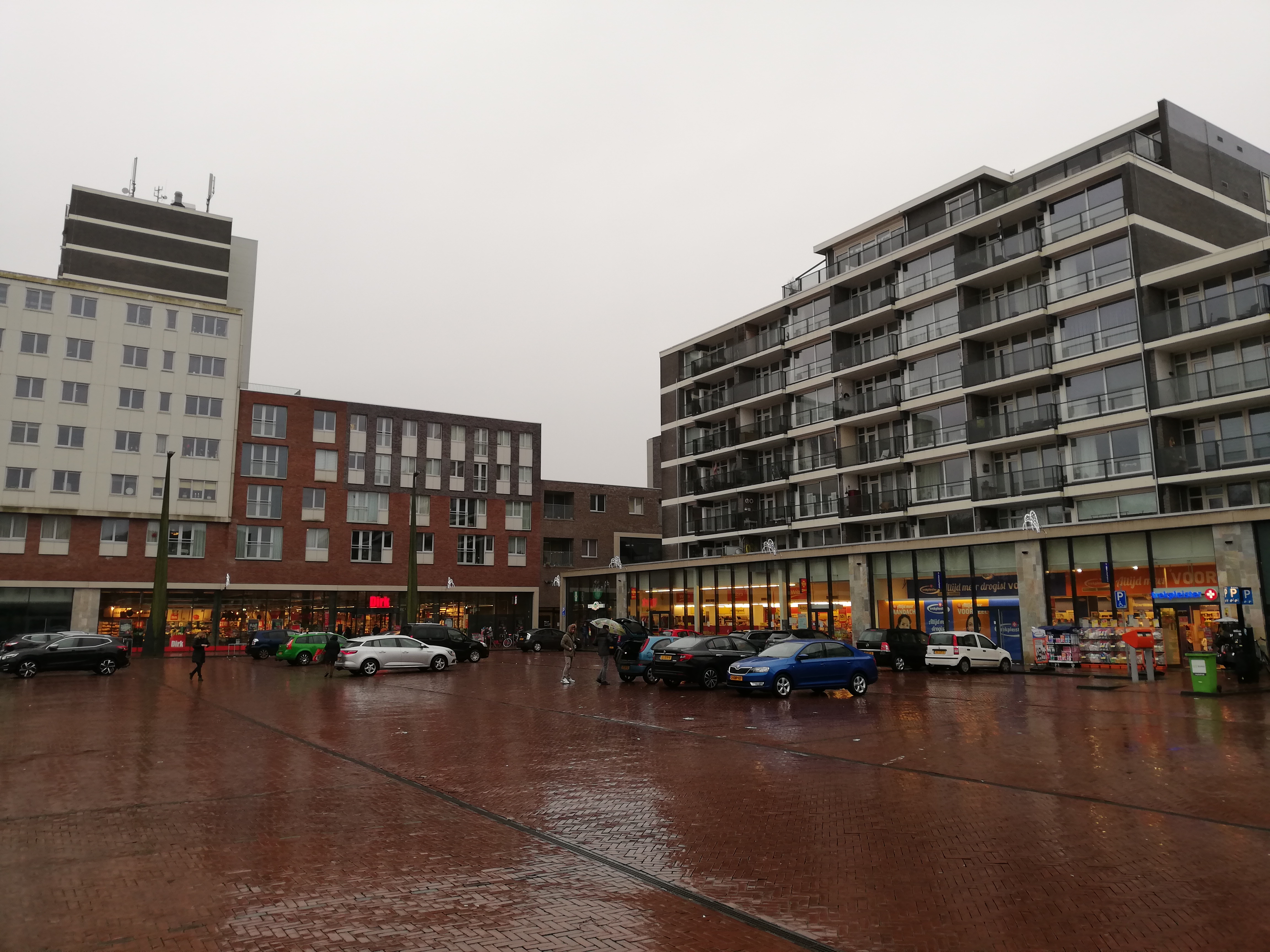
Where a canal once ran through the town centre now lies Drachten's shopping heart — with a history of filled-in canals, high-rise buildings, and a green makeover.
Contents
The NTM tram rails through the town centre are removed and the main bridge over the Drachtster Compagnonsvaart is demolished.
The decision is made to completely fill in the canal through the town centre, known locally as "de Dam".
The new Raadhuisplein shopping centre opens, including Drachten's first high-rise building: a twelve-storey apartment block.
Parts of the shopping centre are covered.
Ageing, asbestos-laden buildings are demolished to make way for a complete renewal.
For 90 million euros, new shops, homes and a parking garage are built; part of the area is renamed "De Marke".
The square is redesigned into a green meeting place, featuring the artwork 'De 8' by Marten Winters.
The town centre of Drachten changes character
Well into the twentieth century, a canal ran straight through the centre of Drachten: the Drachtster Compagnonsvaart, with a tram line running alongside it. In 1964 the NTM tram rails were removed and the main bridge over the canal was demolished. Two years later, in 1966, the decision was made to completely fill in the canal through the town centre — soon affectionately nicknamed "de Dam" (the Dam) by locals.
There were initial plans for a new town hall on this spot, but that plan proved too expensive. Instead, the municipality bought the vacant Minderbroeders Monastery (now Museum Drachten) to serve as its town hall. The new shopping centre that rose on the site of the filled-in canal nevertheless kept the name "Raadhuisplein" (Town Hall Square).
With Drachten's first high-rise
The Raadhuisplein shopping centre opened in 1970 and contained a special feature at the time: Drachten's first high-rise building, a twelve-storey apartment block. From 1979 the first parking meters were introduced, and from 1989 parts of the shopping area were covered to make shopping more comfortable.
Over the years, however, the square's appeal declined: by the early 2000s the area suffered from vacancy, ageing (asbestos-laden) buildings, and the departure of large chains such as Blokker and Kwantum.
90 million euros for a new heart
Between 2010 and 2015, Raadhuisplein underwent a complete transformation. The ageing buildings were demolished, after which an investment of roughly 90 million euros financed new shops, homes and a parking garage. Part of the renewed area was given the new name "De Marke" in 2013 — after the initially proposed name "Gobabis" (referring to Drachten's Namibian sister municipality) was rejected due to an unfortunate double meaning. The reopening also saw the addition of grand café 'De Graancirkel'.
From car park to meeting place
In August 2022 the municipality presented a new town-centre vision, which took shape from 2023 onward with the redesign of the square into a "green living room": a former car park was transformed into a place with green spaces, playground equipment and seating among flower and tree beds. The weekly market on Thursdays and Saturdays moved along with the new greenery.
From 'Boog' to 'De 8'
An artwork by visual artist Ids Willemsma, part of the square's appearance for decades.
Made from car bonnets, this artwork refers to the Dada movement and the famous poem Kurt Schwitters wrote about Drachten in 1923 — and to the name of Museum Dr8888.
The square in pictures
The renewed part of the shopping centre.
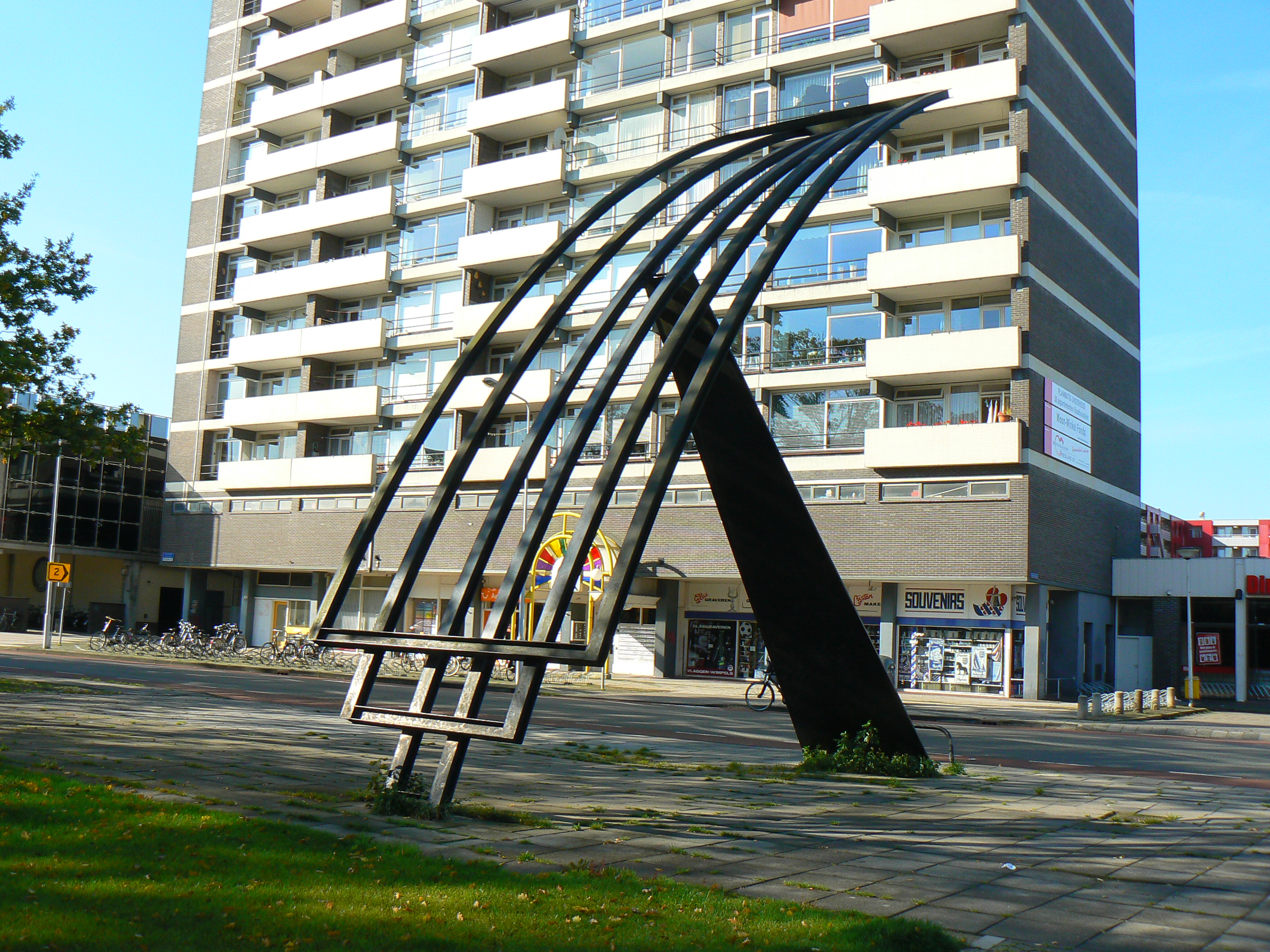
Artwork from 1994 on the square.
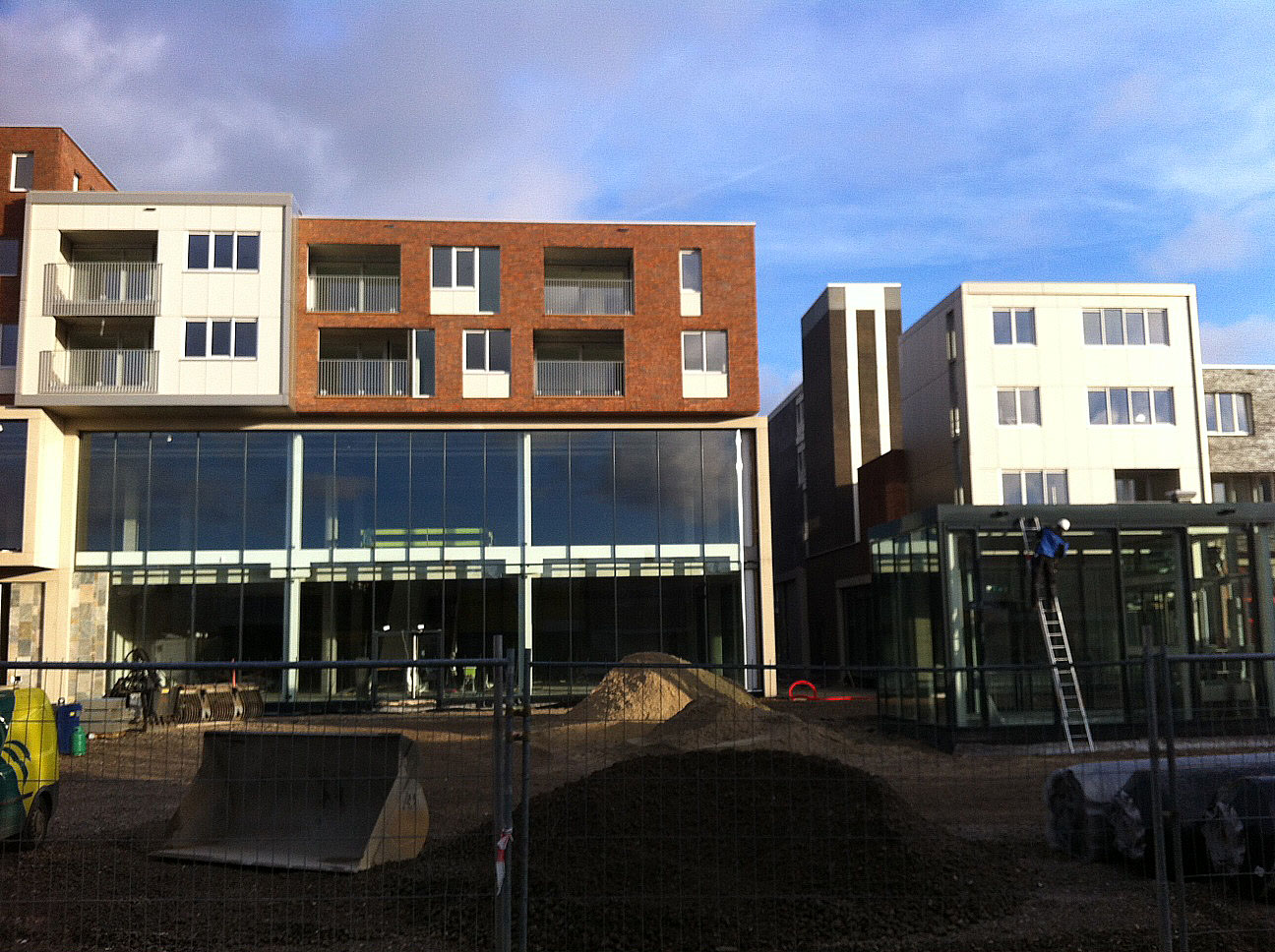
View of the large-scale renovation of the shopping centre.
Source: Wikipedia. Photos: Wikimedia Commons (CC BY-SA).