Drachten's cultural centrepiece since 1960 — a theatre with a turbulent history, world-famous neighbours, and art built right into its facade.
Drachten's growth, driven partly by Philips, calls for its own theatre; a foundation is set up to make it happen.
De Lawei opens, designed by P. Blokland & J. Planting. The name was coined by Mrs Bosma from the De Wilgen district, who won a book token and flowers for her winning entry.
Visual artist Shinkichi Tajiri creates the artwork 'Notenschrift' for the theatre's facade.
Architect Abe Bonnema expands the building considerably with a large hall and new foyers, making De Lawei one of the larger theatres in the Netherlands.
Traffic engineer Hans Monderman redesigns the square without traffic signs or lights — a globally groundbreaking design.
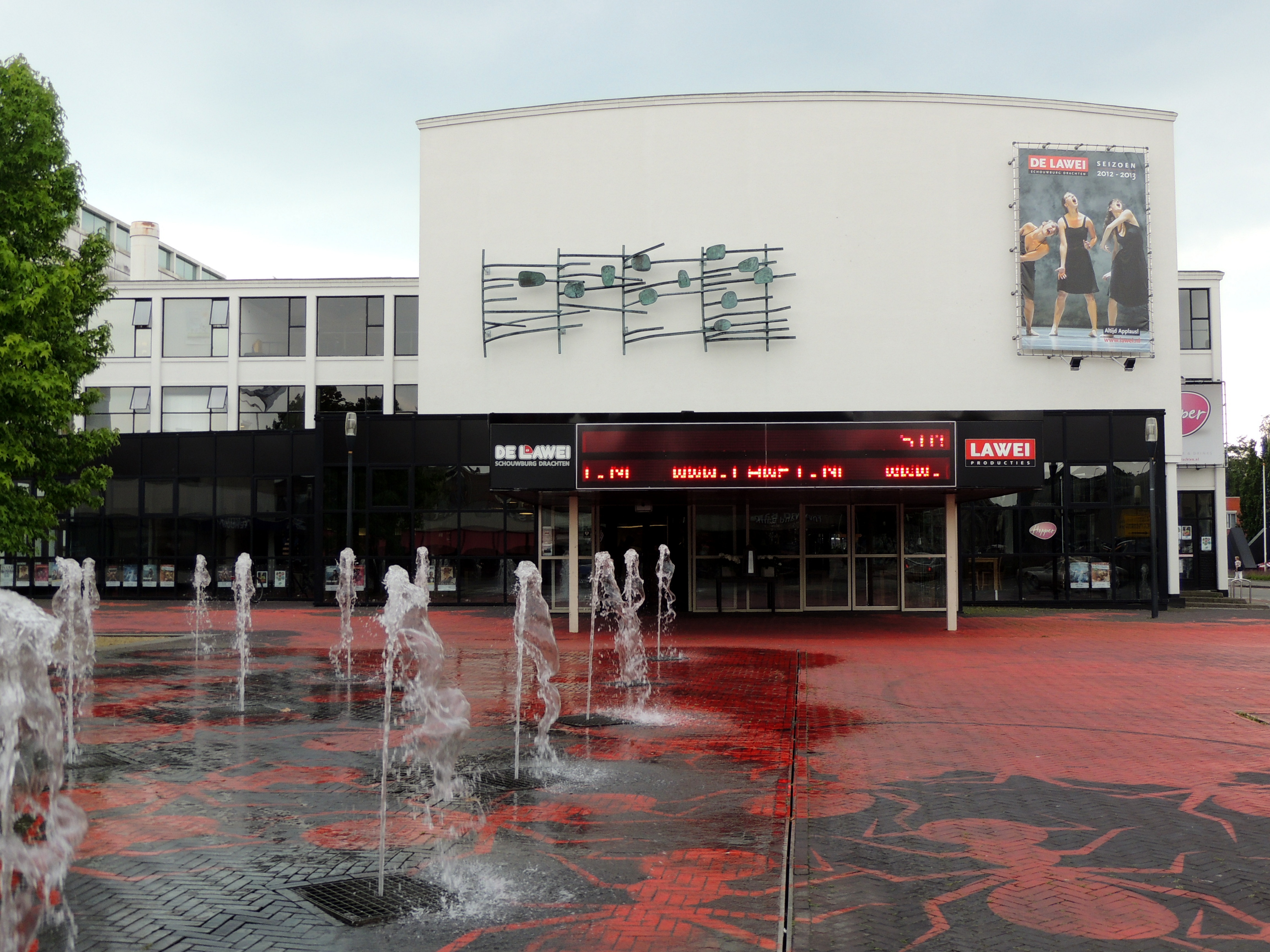
To mark the 50th anniversary, artist Henk Hofstra places hundreds of red ants around the building.
An ambitious renovation by TenBrasWestinga runs completely out of control in both time and budget. See below for the full story.
Henk Hofstra places 45 red dolls for the reopening — an art project that initially causes some confusion.
A theatre for a growing town
The arrival of Philips in Drachten in the 1950s caused explosive population growth. With all these new residents came a growing need for culture, meeting places and relaxation. In 1955 a foundation was therefore set up to build a cultural centre, which eventually resulted in the opening of De Lawei on 20 May 1960. The building was designed by P. Blokland and J. Planting of the municipal works department, with a budget at the time of roughly 800,000 guilders.
The name "De Lawei" didn't come out of nowhere: it was coined by Mrs Bosma from the De Wilgen neighbourhood, who received a book token and a bouquet of flowers for her winning entry.
From village theatre to regional playhouse
De Lawei's success soon meant the building became too small. Between 1984 and 1986, the well-known Frisian architect Abe Bonnema carried out a major expansion, adding a new main hall and extra foyers. This grew De Lawei into one of the larger theatres in the Netherlands, with five halls, three foyers, a restaurant and Theatercafé Hopper. The largest hall today seats 905 visitors.
A renovation that spiralled completely out of control
The most turbulent period in De Lawei's history began in 2013, when a large-scale "vernieuwbouw" (renovation/rebuild) got underway, led by architecture firm TenBrasWestinga from Amersfoort. What was meant to be a modernisation completely derailed: construction costs overran by more than 5 million euros, construction came to a complete standstill at one point, and a drawn-out arbitration dispute arose with the contractor.
The financial and administrative consequences were severe: the Smallingerland municipal council held a council inquiry into how the project had unfolded, and the responsible alderman ultimately resigned. Only in May 2015 could De Lawei be festively reopened — much later and far more expensive than planned.
For the reopening, artist Henk Hofstra installed his artwork "45 Red Dolls" around the building, which caused quite a stir and confusion among residents at the time.
A world-famous traffic experiment right outside the door
Right outside the theatre's front door lies Laweiplein, which in 2004 was redesigned by traffic engineer Hans Monderman as one of the first "Shared Space" intersections in the world: no traffic signs, no traffic lights, no road markings — road users negotiate the space through eye contact. The square, which handles around 20,000 vehicles a day, has grown into an internationally studied example of traffic design and still attracts professionals from around the world.
From facade art to an ant plague
An artwork by Shinkichi Tajiri on the theatre's facade, one of the oldest artworks on the building.
Henk Hofstra placed hundreds of red ants around the building to mark De Lawei's 50th anniversary.
For the reopening after the renovation, Hofstra installed another art piece, this time with 45 red dolls.
Since 2007, the annual Simmerdeis festival has taken place, with performances in venues including Slingepark and De Sluisfabriek.
Address & facilities
Laweiplein 1, Drachten
Five halls (largest hall: 905 visitors), three foyers, a restaurant and Theatercafé Hopper.
De Lawei through the years
The theatre on Laweiplein, the heart of Drachten's cultural life.
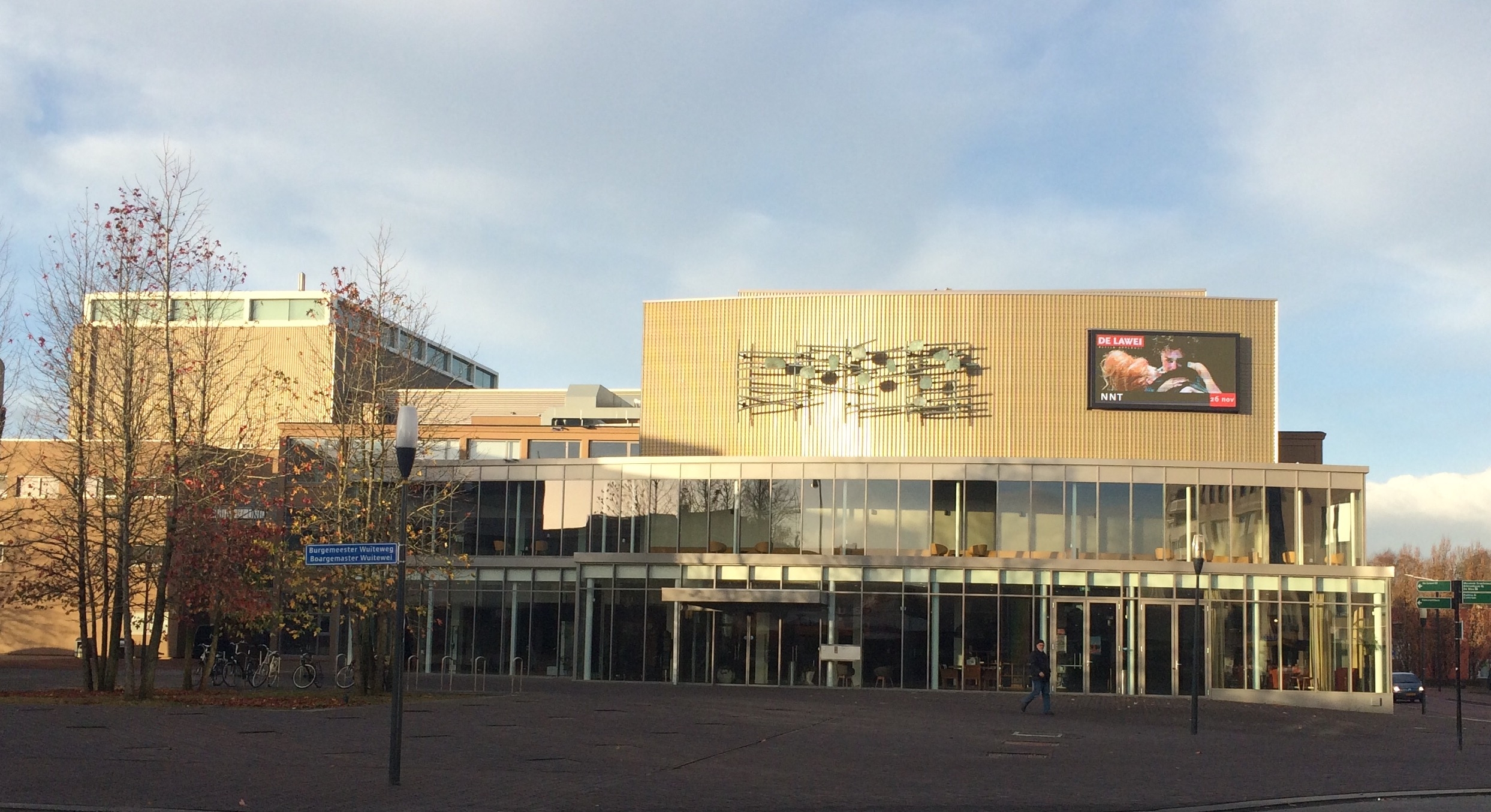
The front of the theatre after the 2013-2015 renovation.
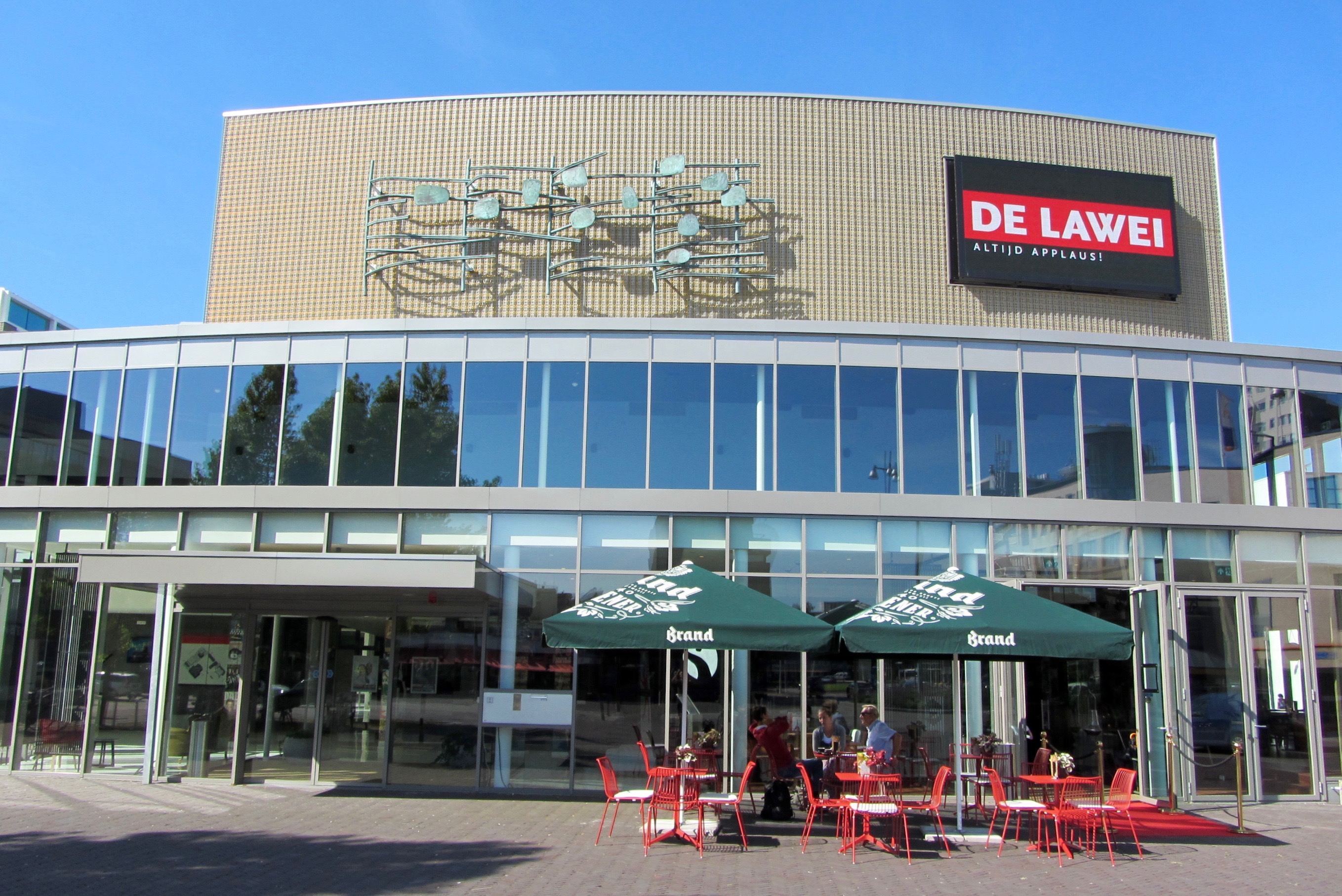
The 1963 artwork by Shinkichi Tajiri on the facade.
Source: Wikipedia. Photos: Wikimedia Commons (CC BY-SA).